

Silent Springs, Shifting Baselines and Seven Generations
A meditation on biodiversity and our collective health and wellbeing

I was already worried about the coyotes. Over the fall and winter, I saw a few fluorescent-green-colored scat piles in the arroyo and then the dogs found a couple of very decomposed carcasses.
Then came weeks of late winter that were eerily silent. Most years, during coyote courtship and mating season, we hear their yips and yowls almost every night from late January to early March as they advertise for mates and defend territories.
I wondered if the neon dung and corpses might point to a reason for their sudden quiet. Maybe someone was poisoning them, and maybe the surviving pack had moved to more hospitable environs.
But then the other night, they were out in force, right near the house, a glorious out-of-tune high-pitched asynchronous chorus—the best free jazz in the animal kingdom. I realize that my worry may seem misplaced—coyotes are in no danger of becoming extinct as a species—and I know their numbers and range have only grown in the past century since their fiercest competitors and predators, wolves and mountain lions and bears, dwindled dramatically in number. Still, I cherish living in a rich ecosystem and even try to nurture the community of human and other-than-human beings every chance I get.
A few years ago, I helped cure a coyote of mange by lacing my compost scraps with Ivermectin. Red, as I took to calling him, went from scruffy looking almost-hairless dog to a having a luxurious full winter coat just in time for winter.
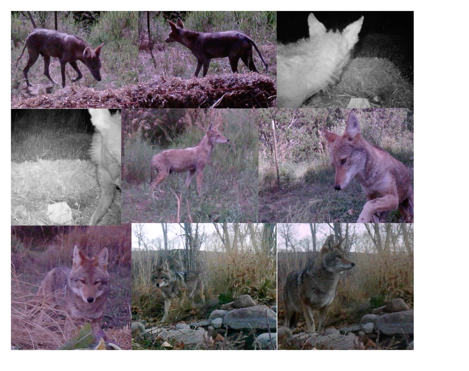
For over a decade, I’ve lived in a traditional northern New Mexico agricultural community nestled against Tewa Pueblos and the National Forest. Even in that relatively short time I’ve noticed changes. Ten years ago, coyote sightings were more frequent, along with sightings of their main food sources. We used to have ample populations of both Desert cottontails and Black-tailed jackrabbits, but now the jackrabbits have disappeared, likely because of the epidemic of Rabbit Hemorrhagic Virus that hit the state about the same time as Covid-19.
The cottontails have come back, but I haven’t seen a jackrabbit in more than 5 years. When I arrived in the valley, there were huge magpie flocks of 40 or more birds, now we are lucky to see the odd pair. The little pond that fills with salamander eggs in the spring is still teeming with life, but last year I saw only a couple of dragonflies, much fewer than previous years. Some new species have moved in, there seem to be more Ravens, and the Acorn woodpeckers have established a year-round colony, making themselves known at the birdfeeder with their loud gravely screech.
The sense of diminishing biodiversity in my own neighborhood tracks with global statistics. Worldwide, wild animal populations are down about 75% from the year of my birth in 1966. I can remember as a child the heavily splattered windshield of my parents’ station wagon every time we took a long road trip, the forests filled with fireflies, and the vernal ditches teeming with tadpoles. Young people today are deprived of those experiences and many others of a richer and more diverse natural world.
The phenomenon has been dubbed the shifting baseline syndrome. It’s the idea that we all set our own experience as the “norm” so those born today in this diminished world only strive to preserve it in that diminished state rather than return it to what it might have been (and might still be) just a generation ago. The shifting baseline syndrome is especially pernicious in cultures where there is little tradition of story-telling or other communication between generations.
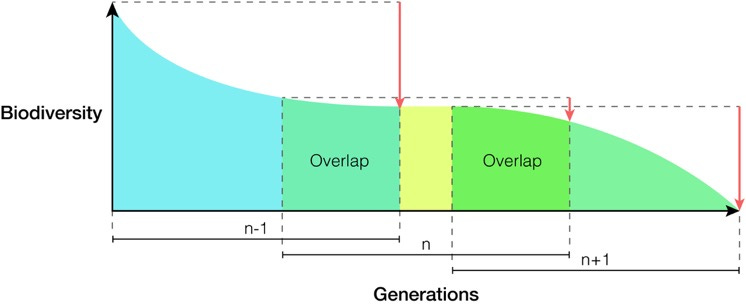
By contrast, many indigenous cultures follow a philosophy called the Seven Generations Principle. Thought to have originated with the Iroquois/Haudenosaunee peoples, the concept is that all decisions should consider repercussions seven generations into the future. The idea of seven generations encompasses the “wingspan” of one life. I might know my parents, grandparents and great-grandparents and my grandchildren or great grandchildren. Oren Lyons, a traditional Faithkeeper and member of the Onondaga Nation (one of the 6 nations that make up the Haudenosaunee) explains it this way: “We are looking ahead, as is one of the first mandates given us as chiefs, to make sure and to make every decision that we make relate to the welfare and well-being of the seventh generation to come. ... What about the seventh generation? Where are you taking them? What will they have?”
Many indigenous cultures also prioritize storytelling, oral traditions, and especially the passing of knowledge from elders to the young. In this way younger generations may understand and vicariously come to know what has been recently lost, even without direct experience.
These ideas of responsible stewardship of our other-than-human communities and ecosystems, and of sharing and passing down knowledge to generations to come are both sorely lacking in mainstream human-centric individualistic society. When we hear the word “abundance” in the media, for example, it usually refers to metrics that apply only to humans and our ability to buy more and better things. Popular media doesn’t consider what the concept of abundance might mean applied to the whole community of living things but instead carves off our human needs as if our wellbeing can be separated from the planet’s. But of course, we are living in a mesh of relationships with other beings and our very survival depends on them.
For one example, consider the biodiversity of the human microbiome and how a consumeristic, individualistic, convenience-driven culture harms our microbial brethren and causes dysbiosis. The chemicals we use and consume every day, embedded in foods and packaging and clothing, are directly causing destruction to the natural world we depend on for life. Forever chemicals or PFAS, air pollution and microplastics harm not only bird and animal life but also disrupt the microscopic life inside our bodies that is essential for our digestive, immune and mental health, and so much more.
Another path is possible if we can learn from indigenous philosophy and become guardians of our whole communities for the benefit of the next seven generations, rather than acting selfishly and myopically on individual materialistic desires. Only by redefining concepts like “abundance” and “wellness” to encompass the whole community of living beings, and giving up a human centric way of thinking and acting in the world, might we find the way back to wellness for the Earth and ourselves.
close to lived observation; Red’s coat growing back, fewer dragonflies, splattered windshields of childhood, really anchor it
I think the jackrabbit populations haven't rebounded after the hemorrhagic virus in part because the ongoing drought has been very hard on the bunchgrasses and other plants they graze on. That shifting baseline is a real thing: as you point out, our western culture simply doesn't pass on a vision of the world from previous generations, and our exploitive mindset doesn't give us any sense of kinship or reciprocity. It's as if we have forgotten the Earth as our home community. I'm looking forward to reading Kinship Medicine. Blessings to you from my terraphilic corner of Substack!